Physics-based building intelligence

Smarter HVAC.Lower energy use. Consistent comfort. Fewer faults.

Builtwins continuously optimizes HVAC operation to improve indoor comfort, detect issues early and give maintenance teams the insights they need to act faster.

See what your building is losing See how it works
> 350,000 m² Under predictive control
> 13 years Of research & development
How it worksRunning continuously
01Building data
Building as-built data HVAC technical sheets Building sensors
02External data
Weather forecast Grid constraint Energy prices
BUILTWINS TECHNOLOGY
Live digital twin
Predicts demand & building behaviour
A physics-based model of your building, calibrated zone by zone on real data 
Fully autonomous, 24/7
No facility manager burning hours on setpoints in the BMS. Set the comfort limits once — Builtwins does the rest, every 15 minutes.
03Measured results
Up to 45%
lower energy use
Comfort
maximisation
Fewer faults
through autonomous testing
Lower energy Better comfort Fewer faults Measured results

01 — The platform

One control layer.Integrating building HVAC

Builtwins adds predictive intelligence to your existing infrastructure. No black box. No rip-and-replace. A precise model of how your building really behaves.

01 Built for complexity

Physics-based digital twin

A detailed virtual model of the building envelope and HVAC components, calibrated on real measurements — zone by zone.

02

Predictive control

Weather, solar gain and system inertia are anticipated — not merely reacted to. The optimisation re-runs every 15 minutes, always within the constraints the building has to respect.

03

Faults you can act on

Excitation tests drive every actuator and sensor and compare the response the model expects against the one the building actually gives. The gap between the two is the fault.

04

Reporting you can hand over

Periodic reports on building comfort, energy consumption and the overall health of the HVAC system — measured, zone by zone, ready for owners, boards and ESG disclosure.

02 — Who it's for

Built for those accountable forbuilding performance.

Builtwins supports organisations operating complex HVAC systems that need to reduce energy use, improve indoor comfort and simplify building operations.

01

Building owners and asset managers

Better energy performance, comfort and operational visibility across a single building or a whole portfolio — which raises asset value, keeps buildings compliant and cuts CO₂.

02

Facility and maintenance teams

Detect faults earlier, understand performance deviations and focus interventions where they create the most value.

03

Engineering and building-services partners

Add predictive HVAC optimisation to existing services and deploy advanced building control at scale. 

Where Builtwins delivers value

BUILDING SEGMENTS
01

Office buildings

Optimise HVAC operation around changing occupancy, working hours and weather conditions while maintaining a comfortable indoor environment.

02

Hospitals and care facilities

Support stable indoor conditions, reliable HVAC operation and proactive maintenance in buildings where comfort and continuity are essential.

Includes hospitals, residential care facilities and care homes.

03

Public and governmental buildings

Improve performance across administrative buildings, schools, universities and other public facilities with complex schedules, zones and operating requirements.

04

Warehouses and logistics facilities

Optimise heating, cooling and ventilation across conditioned warehouses, logistics centres and spaces with varying occupancy, schedules and temperature requirements.

05

Residential developments with centralised systems

Optimise energy production and distribution across apartment buildings and residential developments equipped with centralised HVAC infrastructure, such as district heating networks, shared heat pumps and central heating or cooling systems.

Best suited to large and complex buildings where energy performance, comfort and operational reliability are critical.

03 — The problem

Overconsuming.And nobody knows why.

Most buildings still run on fixed schedules and heating curves — rules that treat each subsystem as an island and can't anticipate weather, occupancy or thermal inertia. Monitoring tells you that it's happening. It doesn't stop it.

Consequence 01

The CAPEX doesn't pay back

Owners invest heavily in making buildings greener and more durable — heat pumps, ATES, insulation, new plant — and then never see the energy reduction the investment promised, because the control layer on top wastes it.

Consequence 02

Too cold in summer, too hot in winter

When a setpoint isn't reached, the system reacts by heating or cooling at full power — and by then it is already too late. Better to anticipate: pre-heat or pre-cool against each day's weather forecast, taking the building's thermal inertia into account, instead of chasing the temperature after the fact.

Consequence 03

Broken equipment nobody can see

A large share of valves, actuators and sensors is not working properly — and sits hidden above the ceiling, so maintenance firms struggle to find and solve the issue. Those faults drive the same overconsumption and the same discomfort.

Conventional controlActs on fixed setpoints Monitoring platformsObserves, never acts on the building BuiltwinsPredicts, decides and writes back
Fixed rules and heating curves Dashboards and alerts Optimisation re-run every 15 minutes
Reacts to today's temperature Reports what already happened Anticipates weather, solar gain, inertia
Each subsystem an island Observes the islands Production, emission and ventilation modelled together
Faults found when someone complains Flags anomalies Tests every actuator, finds root cause
Hands you a to-do list Executes the control decision

04 — Where we sit

We don't replace your BMS.We make it predictive.

Your building already has a BMS, valves, VAV boxes, sensors and wiring. None of that is the problem. The problem is the decision logic on top of it.

We integrate over BACnet, read your points, run the optimisation on a digital twin of your building, and write setpoints back. Your BMS keeps executing. Your installer keeps their contract. And if you ever stop working with us, your original control remains — nothing was removed.

Added

Builtwins

Physics-based digital twin · Model Predictive Control · excitation testing · anomaly detection

↓ Setpoints, every 15 minSensor data ↑

Your BMS

Unchanged. Keeps executing, over BACnet.

↓ CommandsMeasurements ↑

Building devices

heat pumps, ATES, borefield, pumps, ventilation units, radiant ceiling, VAV boxes, fan coils, sensors, ...

Step 01

Model

A digital twin built from floor plans, HVAC schematics, technical sheets and coupled to all relevant sensors and actuators — zone by zone and HVAC devices by HVAC devices. Built on physics, so it needs no historical data to run.

Step 02

Predict

Weather, solar radiation and your building's own thermal response, anticipated per zone. Concrete core activation takes hours to react. The model knows that.

Step 03

Optimise

Energy minimised within your comfort constraints — temperature and CO₂ — then sent as setpoints or other control action to your existing control system.

Step 04

Detect

Excitation tests probe sensors, actuators and control logic. Anomalies surface with root causes, so maintenance acts on what matters.

↻ The full cycle re-runs every 15 minutes, against the building's live state.

05 — Excitation testing

We test every actuator.Overnight.

A digital twin is only as good as the hardware it commands. Each valve, VAV box and coil is driven through a controlled test, and the building's real response is compared against the model.

Responding as modelled Anomaly detected — 24% of actuators and sensors at Herman Teirlinck

At Herman Teirlinck excitation tests ran across more than 600 rooms. At VAC Mechelen it covered roughly 400 zones and identified anomalies in about 35% of the emission system, which were then resolved with the installer. Verifying this by hand is impractical, doing this periodically is effectively impossible.

06 — The proof

Four buildings.Different issues solved.

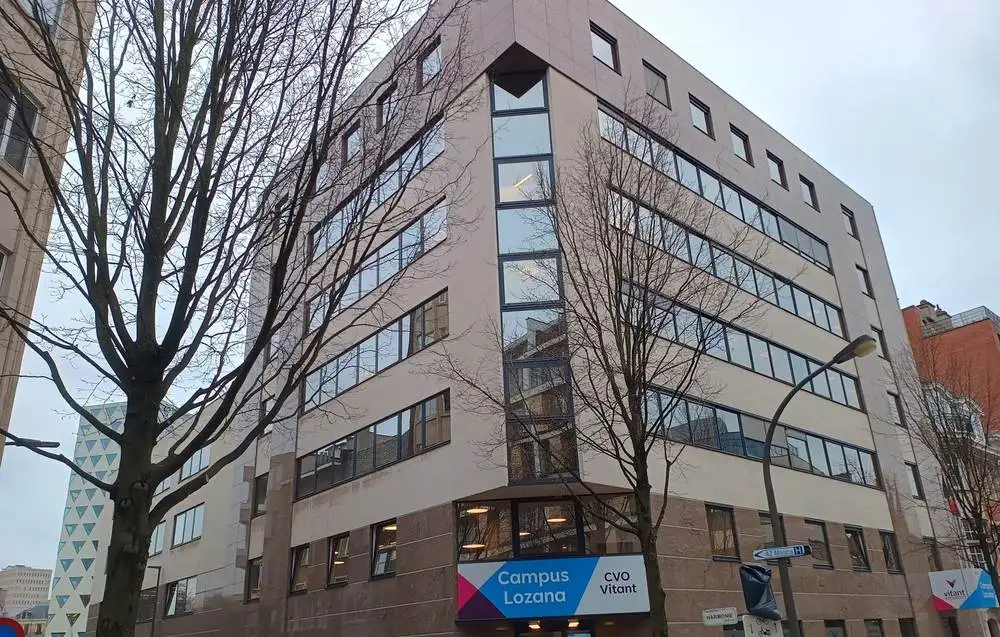
Lozana campus building in Antwerp seen from the street
Lozana · Antwerp · 4,000 m² · Equans / Provincie Antwerpen

−42% electricity and −27% gas, without touching the boilers

A school on two gas boilers and radiators, with classrooms, a library and offices whose occupancy swings sharply. Fixed heating curves couldn't anticipate weather, solar gains or an empty building.

−42% electricity −27% gas €16,865 saved / year <1 yr payback 15 anomalies resolved
Read the use case
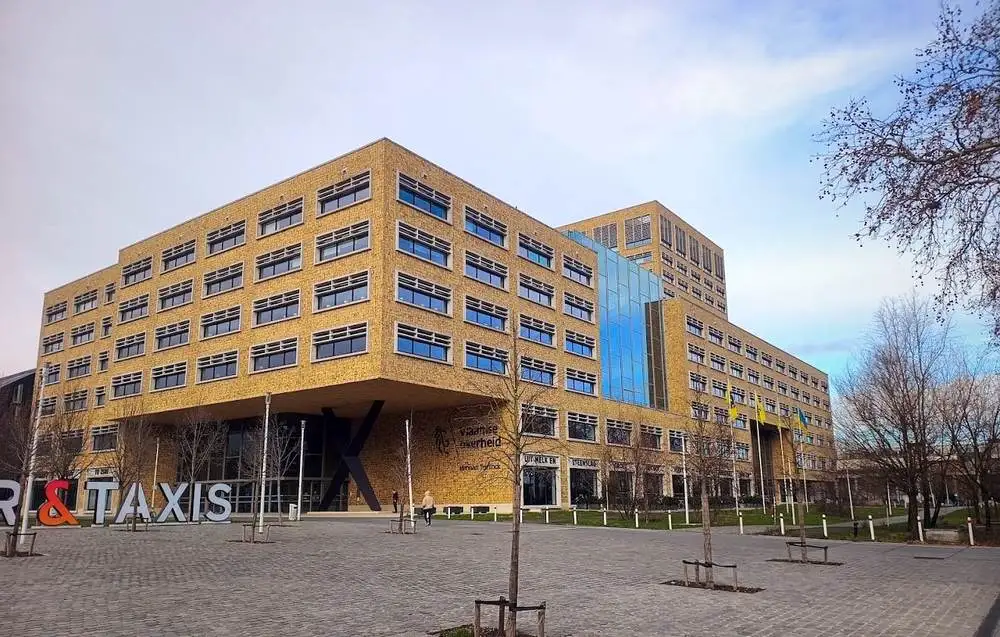
Herman Teirlinck building in Brussels
Herman Teirlinck · Brussels · 52,000 m² · Baloise / HFB

600 rooms tested overnight, heat-pump energy down 38%

Passive-standard offices on ATES and concrete core activation, with more than 600 rooms each carrying their own sensors, VAV box, heating coil and valve — plus the thermal inertia of activated concrete floors.

−38% heat-pump energy −34% HVAC electricity 24% of actuators faulty 99.7% comfort in range
Read the use case
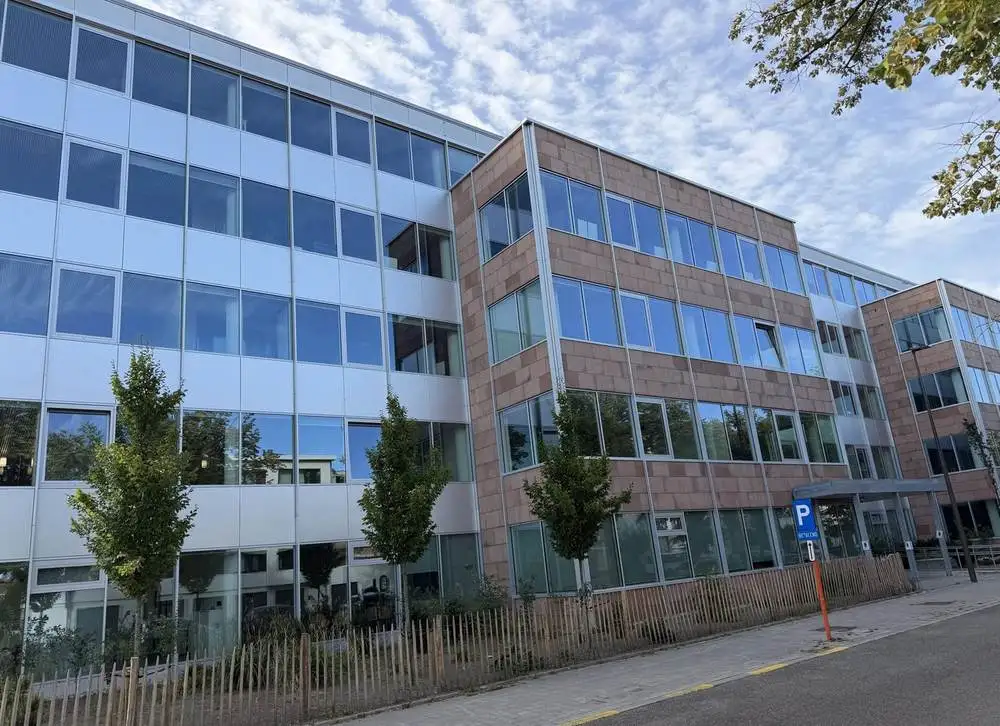
VAC Mechelen office building
VAC Mechelen · 14,713 m² · Aedifica (Cofinimmo Offices) / HFB

Nine control modes replaced by one predictive brain

ATES with limited capacity, PVT panels, a 100 m³ buffer and both passive and active cooling. The original logic ran nine modes depending on demand and the state of the ATES, across roughly 400 zones.

9 → 1 control modes 44 anomalies resolved 99.1% comfort in range 100% CO₂ in limits
Read the use case
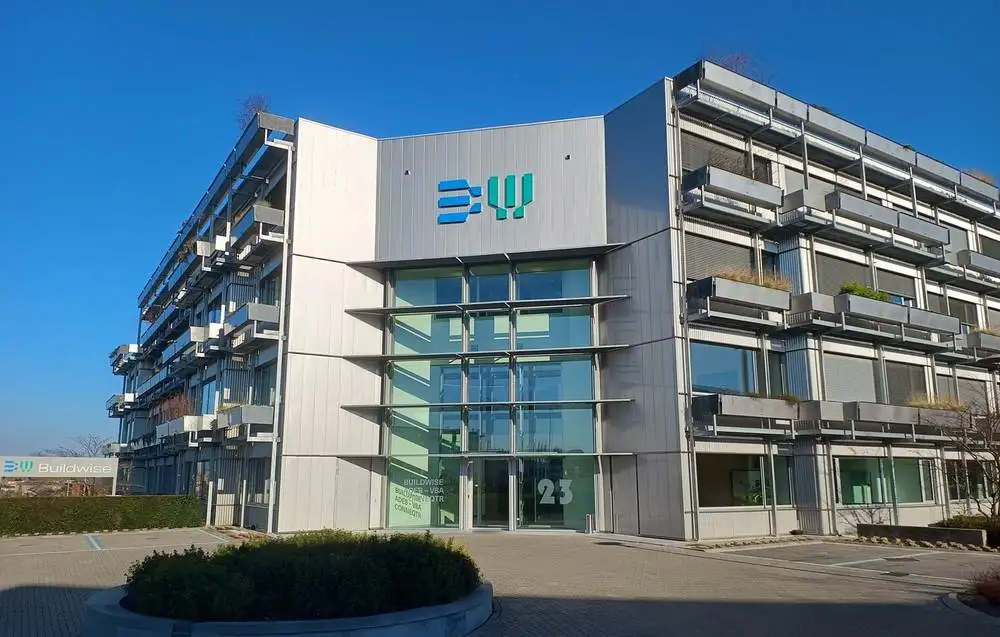
Buildwise headquarters in Zaventem
Buildwise (BBRI) HQ · Zaventem · 10,000 m²

Three heat pumps in constant alarm — and no one knew why

Two geothermal heat pumps for heating and cooling, a third for domestic hot water, all on a shared borehole field. They alarmed repeatedly with no clear cause. The digital twin pinpointed the fault and quantified the influence of solar gains on the two most sun-exposed façades.

−20% electricity €10,760 saved / year 35 anomalies detected 12 t CO₂ avoided / year
Read the use case

07 — Regulation

Performance is becominga reporting obligation.

European regulation is turning building performance into a reporting obligation. Builtwins produces measured, zone-level operating data and continuous optimisation that contribute to meeting monitoring, control and optimisation requirements under EPBD and BACS frameworks — and give ESG reporting metered outcomes instead of estimates.

EPBD

Monitoring

Buildings are required to track energy performance continuously, not once a year at audit.

Zone-level operating data, logged continuously over BACnet
BACS

Control and optimisation

Automation frameworks expect systems that adjust themselves and flag underperformance.

Optimisation re-run every 15 minutes, with faults detected and ranked
ESG

Reporting

Disclosure asks what a building actually consumed and saved — and how that is evidenced.

Metered outcomes against your own baseline, not modelled estimates
What ends up in the report
Estimated performanceAssumed
Measured with BuiltwinsMetered
15 min
optimisation interval, logged
Zone level
granularity, not building level
Own baseline
savings measured against it

08 — Management team

Meet the team.At your service

Builtwins is a KU Leuven spin-out. The twin is built on building physics and thermodynamics — which is why it needs less historical data than a purely data-driven model, and why it can explain what it changed and why.

Dr. Filip Jorissen Dr. Filip Jorissen CTO
Dr. Damien Picard Dr. Damien Picard CEO
Edouard Moens de Hase Edouard Moens de Hase CFO
Engineering partner Sweco

Builtwins works directly with building owners and operators and alongside leading engineering partners, including Sweco, to deploy predictive HVAC optimisation across buildings and portfolios.

Our mission

To make every building a sustainable part of society — giving its heating, cooling and ventilation systems optimal control, so it uses fewer resources while the people inside stay comfortable.

09 — Questions

What owners ask first

Do you replace our BMS?

No. Builtwins runs on top of the building management system you already have, integrating over BACnet. We replace its decision logic, not the system itself: predefined control modes are retired while the BMS carries on executing. Your installer keeps their contract, your maintenance team keeps their access, and if you stop working with us the original control remains.

10 — Get in touch

Let's talk aboutyour building.

Leave your email or phone number and we'll get back to you. Whether you are weighing up a first project or simply want to know whether predictive control suits your building, we are glad to talk it through.

Or write to info@builtwins.com directly.