Complexity reduction use case · Model predictive control
How VAC Mechelen uses Builtwins Model Predictive Control and a physics-based digital twin to run a complex HVAC plant — raising comfort while lowering energy use.
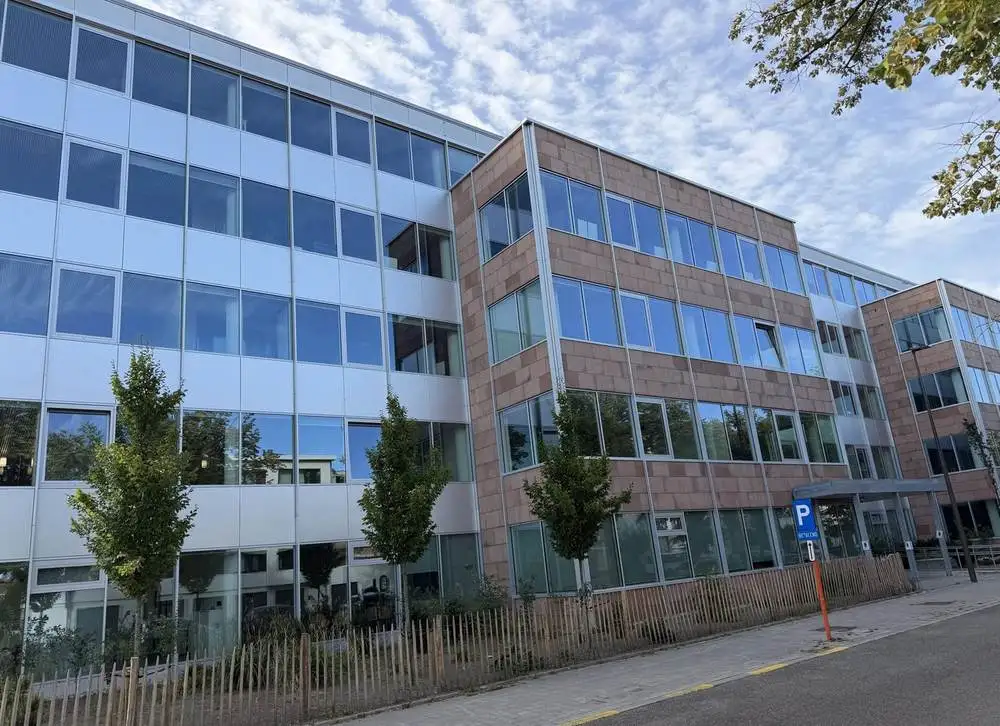
VAC Mechelen — 14,713 m², ATES with PVT panels and buffer, MPC + excitation tests
A 14,713 m² office building over five above-ground floors, with a technical floor on the roof and two levels of underground parking, housing open-plan offices, meeting rooms and a restaurant. Heating and cooling are produced mainly by a geothermal Aquifer Thermal Energy Storage (ATES) system and distributed via radiant ceilings, with ventilation through four air handling units, VAV boxes and CAV boxes.
The challenge lies in the complexity of the HVAC system. Because ATES capacity is limited, the plant also carries PVT panels, a 100 m³ buffer and the ability to cool either passively or actively. The original control logic ran nine different modes depending on demand and the state of the ATES. With around 400 zones, most with their own actuator and sensors, verifying that everything worked was effectively impossible by hand.
Builtwins goes beyond monitoring. We build a physics-based digital twin of the building — modelling production, emission and ventilation together across every zone — and run Model Predictive Control on top of it. At VAC Mechelen, MPC now controls the entire HVAC system, deciding how to operate it instead of relying on the original logic. This completely replaces the nine predefined modes, resulting in higher comfort and lower energy use. Our excitation-test methodology tested the whole system automatically, identifying and describing anomalies in about 35% of the emission system, which were then fixed together with the installer.
A digital twin built from floor plans, HVAC installation and sensors, zone by zone.
Weather, solar radiation, and the building's own thermal response are anticipated per zone — not just today's temperature.
Energy minimised within comfort limits (temperature, CO₂); re-run every 15 minutes.
Anomalies surfaced automatically, so maintenance acts on the faults that matter most.
Heating, ventilation and cooling drive a large share of a building's energy use — yet most systems are still steered by fixed rules that ignore how the building actually behaves. A digital-twin approach moves beyond dashboards: it reveals the real levers of optimisation, turns technical data into decisions, and helps owners meet tightening energy and ESG requirements.

Let's turn your HVAC data into measurable savings.
Talk to Builtwins →info@builtwins.com | www.builtwins.com